 EN
EN
 中文
中文 English
 Pусский
 Français
 Español
Your apartment building’s power distribution panel is rusting through its third enclosure in eight years. The maintenance team complains about the weight every time they need to open it for a meter reading. A few streets away, a corner store’s steel cabinet swelled shut after a week of coastal drizzle, delaying a utility inspection. These aren't isolated headaches – they’re symptoms of a material mismatch that’s easy to fix once you know what to look for.
Across residential compounds, small commercial units, and even EV charging stations, the physical container that protects electricity meters and breakers often gets chosen by habit: metal if the budget is tight, SMC if the engineer remembers a specification from a past industrial project. But a quiet shift in enclosure technology is making polycarbonate‑ABS blends the go‑to choice for a growing number of installers. Here’s how to tell if that shift makes sense for your next project.
Why “Just Pick Metal” No Longer Works
For decades, powder‑coated steel was the default. It’s cheap, widely available, and familiar. The problem starts when you install it outdoors – even under an eave. Morning condensation, salty air, and temperature swings gradually defeat the coating. Once rust begins, the structural integrity drops, the IP rating becomes irrelevant, and you’re looking at an unplanned replacement within three to five years in temperate climates, sooner near the coast.
Weight is another hidden cost. A single‑phase steel enclosure isn’t a gym session, but multiply it across a 200‑unit residential tower, and you’re scheduling two technicians just to handle the hardware safely. In retrofit projects where walls are plasterboard or lightweight block, the anchoring requirements escalate quickly.
This doesn’t mean steel is obsolete. It still holds an edge in extreme mechanical impact scenarios, like heavy forklift traffic in warehouses, where an accidental hit could shatter a plastic housing. But for the vast middle ground – apartment hallways, retail backrooms, rooftop solar combiner boxes, small pump stations – a properly engineered PC+ABS enclosure outperforms steel where it matters day to day.
The PC+ABS Difference, Explained Simply
Polycarbonate‑ABS is a blend that marries the strength and UV‑stability of polycarbonate with the processing ease and chemical resistance of ABS. The result is a housing material that is:
-
60‑70% lighter than a comparable steel box, yet tough enough to pass IK08 impact tests.
-
Inherently corrosion‑free – no coating to scratch, no galvanic reaction with copper busbars.
-
UV‑stabilised so it doesn’t yellow or embrittle after five years of direct sun.
-
Self‑extinguishing with a UL 94 V‑0 rating, meeting fire safety codes without extra coatings.
When specified with a well‑designed gasket and lid, these enclosures routinely carry IP65 or even IP66 ratings, meaning they shrug off driving rain and dust ingress. For metering applications in climates where humidity and temperature swing between -25°C and 70°C, that’s a massive reliability boost.
PC+ABS vs. SMC: When Each Wins
SMC (Sheet Moulding Compound) is the heavyweight champion in industrial plants where 100°C ambient temperatures or aggressive chemical vapours demand a thermoset material. SMC handles temperatures up to 85°C continuously without softening, and its glass‑fibre reinforcement gives it extreme rigidity.
But SMC comes with trade‑offs: it’s heavier than PC+ABS, the colour is usually grey with limited design flexibility, and the manufacturing process makes rapid customisation slower and costlier. For a residential or commercial building where the enclosure sits in a public corridor, visual appearance matters. PC+ABS can be moulded in bright white, beige, or even custom colours, with smooth surfaces that are easy to clean and blend into modern interiors.
Here’s a quick decision framework:
| Your condition | Best material |
|---|---|
| Outdoor coastal / high‑humidity, frequent access | PC+ABS |
| Indoor corridor with aesthetics requirement | PC+ABS |
| Attic or sun‑exposed wall, moderate budget | UV‑stabilised PC+ABS |
| Heavy industry, >85°C, chemical splash | SMC |
| Extreme mechanical impact (forklift zone) | Steel (with regular inspection) |
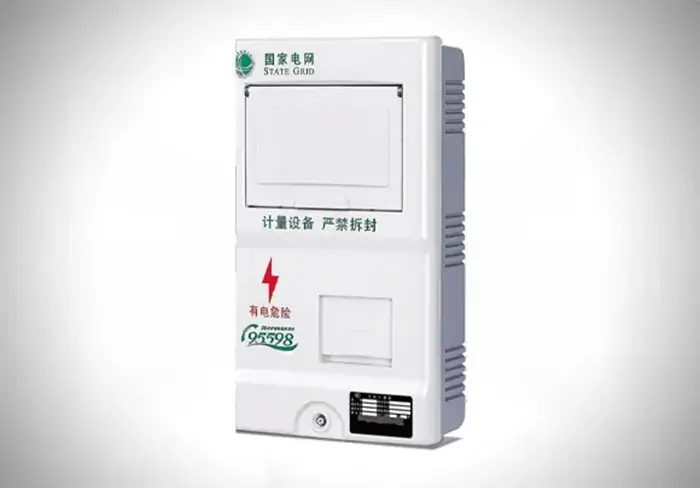
If your project falls in the top three rows, you can now pick a solution that won’t rust, won’t weigh your team down, and won’t require a repaint in five years. For a closer look at what’s currently available in durable polycarbonate enclosures for electric meters, the configurations span single‑phase, three‑phase, and prepaid variants with transparent covers – all designed to keep utility checks quick and tampering obvious.
What to Check Before You Order
Specifying the right non‑metallic housing isn’t just about “PC+ABS = good.” The blend ratio, wall thickness, and gasket design make the difference between a box that lasts 15 years and one that fails a rain test in month six. Ask your supplier these five questions:
-
What’s the exact PC/ABS ratio, and is it UV‑stabilised?
Look for a blend with at least 50% virgin polycarbonate and a UV package rated for outdoor exposure per ISO 4892‑2. -
Can you show IP test certificates from an accredited lab?
IP65 on a spec sheet is meaningless without a test report. Demand a copy. -
How is the door sealed – single lip, double lip, or foam‑in‑place gasket?
A double‑lip labyrinth design with an EPDM or silicone gasket offers far better long‑term sealing than a simple foam strip. -
What’s the UL 94 flammability rating of the actual moulded part, not just the raw resin?
Moulded parts can lose their UL rating if the wall thickness is too thin. -
Do you provide X‑ray or ultrasonic inspection reports for critical batches?
Leading manufacturers run internal defect checks on load‑bearing bosses and hinge points. This matters when the box will be opened monthly for readings.
If a supplier can’t answer these clearly, it’s a red flag. Serious enclosure builders document this because they know a failing box on a live installation creates liability far beyond the cost of the housing itself.
Installation Habits That Extend Life
Even the best PC+ABS housing can fail if installed poorly. Three common mistakes to avoid:
-
Overtightening the mounting screws. The material is strong but can crack if you drive screws with an impact driver set to maximum torque. Use a torque limiter or hand‑tighten and add a drop of threadlocker.
-
Blocking drainage holes. Many outdoor enclosures have small weep holes at the bottom edge to let condensation escape. Silicone sealing them “to keep bugs out” traps moisture inside.
-
Mixing metal types on cable glands. Nickel‑plated brass glands can set up galvanic corrosion with the copper earth bar if water bridges them. Stick to plastic or stainless‑steel glands for outdoor PC+ABS installations.
A Smarter Way to Match the Box to the Building
We’ve seen too many projects where the enclosure was an afterthought – picked from a catalogue page the night before delivery. When you switch your thinking from “any box will do” to “this is part of the building’s safety and monitoring system for 15+ years,” the material choice becomes obvious for most light commercial and residential contexts.
If you’re looking to evaluate pre‑engineered lightweight non‑metallic metering solutions that already address the IP, UV, and impact requirements discussed here, you can explore Chundexin’s range of PC+ABS power distribution boxes – designed with double‑lip seals, virgin polycarbonate blends, and batch X‑ray inspection to avoid the quality roulette that plagues commodity enclosures.
Choosing the right enclosure isn’t the most exciting part of a build, but it’s one where the right decision quietly prevents years of maintenance calls. Now you have the comparison framework to make that decision in ten minutes, not hours.